
Description
ABOUT
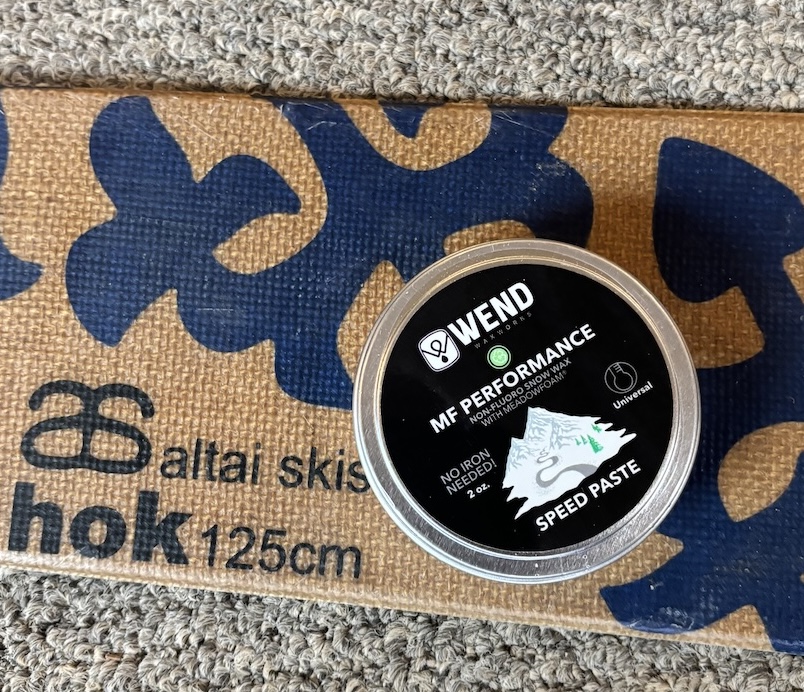
We have recently teamed up with Wend Wax Works, based in Southern California. Originally founded as a surfboard wax maker in the mid-1960s, Wend started making ski waxes in 1968 (surfers and skiers share a natural connection :). Wend Wax Works is the first company to experiment with and produce waxes using plant additives with hydrophobic properties on par with petroleum- and fluoro-based waxes. Their waxes are biodegradable.
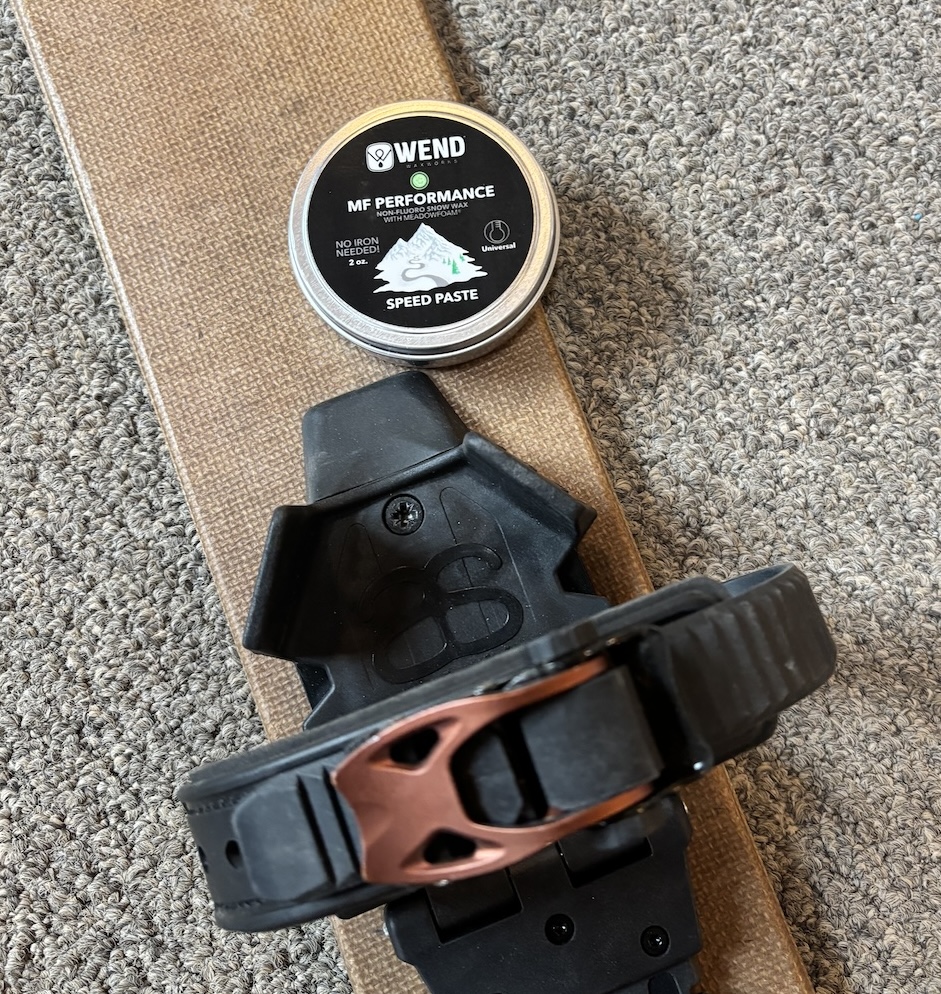
We have found that using one wax for both the base and the skin on the Hok and Tao skis is the simplest, easiest and fastest way to deal with icing and clumping on the Hoks, as well as on other skis and skins with icing problems. Wend wax works on both the black base (Ptex) and the skin material. It’s ideally put on before heading out, but it’s also easy to use in the field while skiing, since many of us (me included) don’t always prep our skis ahead of time.
WHEN DO YOU NEED TO WAX?
Any time snow warms from cold, crystalline snow to at or above freezing, it becomes transitional. The sharp crystals become sticky as they warm and moisten. Over time they round out and become more granular, losing their stickiness, and with it your need for wax. At the transition, though, snow is very sticky and clumpy, and ice can build up on your skins and bases. Spring is the worst time for this: going back and forth between cold crystal snow on north aspects and sun-warmed snow on south aspects often causes icing. A rise in air temperature will do this as well, when cold powder warms to freezing or above. Fish-scale skis can be prone to icing too, especially as they age.
HOW TO WAX
The video above shows some waxing basics. Start by scraping all snow and ice buildup off the base and edges. You may have to scrape vigorously to get the ice embedded in the fur of the skin. The felt wax applicator (not shown here) works well for putting the wax on the ski and skin and getting an even spread on the skin. Rub the wax in tip to tail or sideways. The heat from the friction helps spread the wax and embed it in the fur. Let it sit for at least 5 minutes, and you’re good to go.
We recommend using a plastic scraper (always tip to tail) to clear snow and ice off the base. If you bought skis from us in the last few years, we included a small, credit-card-style plastic scraper. These are super handy for scraping skis before waxing or before putting them away after a tour, and they fit easily in any pocket. We do not recommend metal scrapers, as they can damage the ski and/or skin.
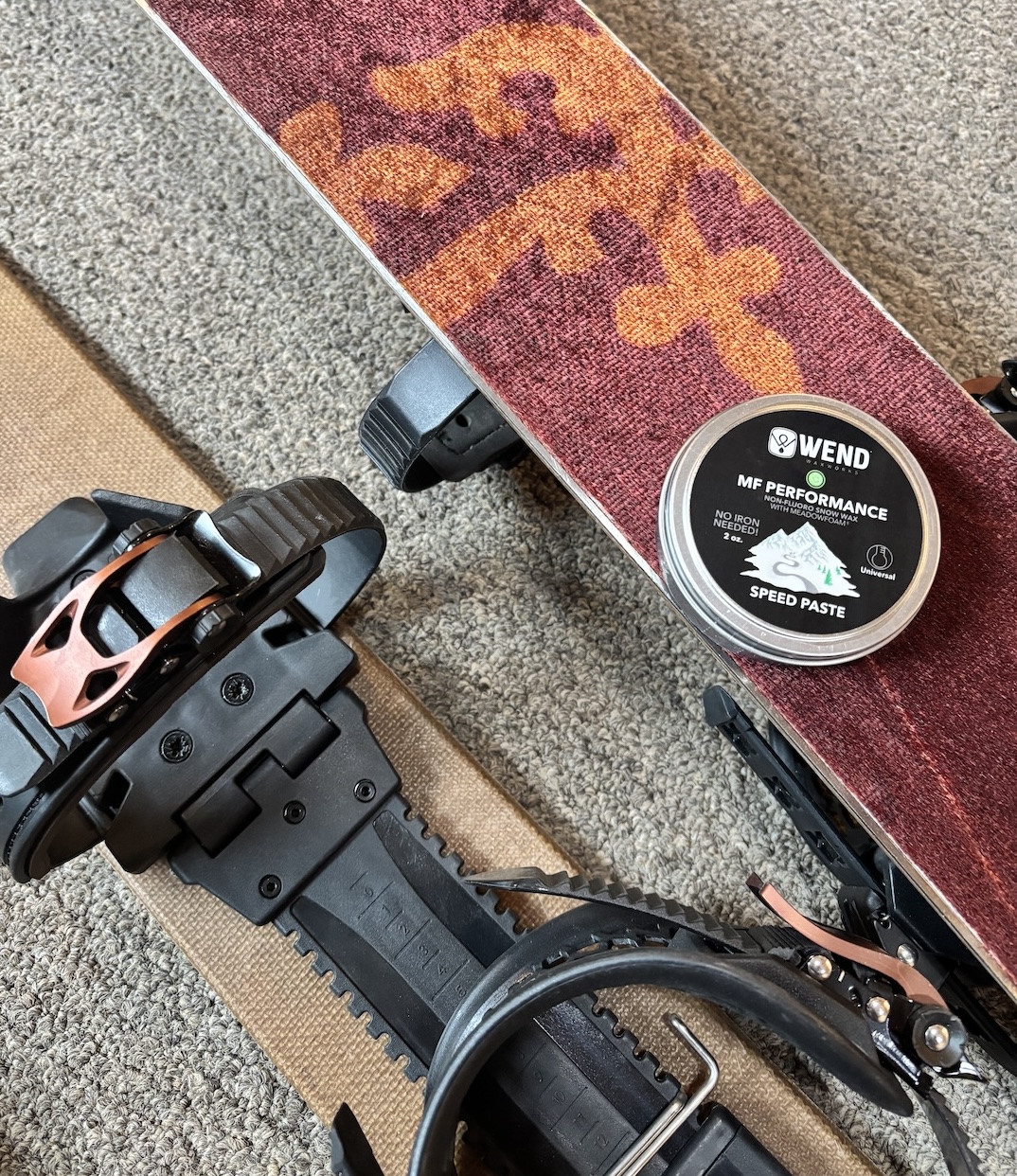 We have tried many waxes over the years. Wend wax works well at keeping skis ice-free when applied correctly (de-icing the skins well is the key). The small container makes the wax easy to carry and apply, so you’re back on your skis quickly. One container should last you a few seasons of regular skiing.
Some cautions:
- Do not use metal scrapers, as they can damage the base and skin.
- We do not recommend liquid or spray-on waxes. They contain a lot of petroleum solvents, which can soften and loosen the glue on the skins over time, particularly where the front seam of black Ptex meets the skin. We also found that liquid waxes were less durable over time than paste waxes.


